

 As a novelist who has spent my life shaped by immigration, I’m drawn again and again to immigrant novels that explore what it means to leave one home behind and build another. I grew up undocumented in the U.S., and that experience, the everyday fear and longing, the complicated love for the country that didn’t always love me back, is one reason I write stories like The Secret Side of Empty, Love in English, Julieta and the Romeos (and a short story in the anthology Come On In), and my play Denaturalization. Immigrant stories are not a niche for me. They’re the lifeblood of my work and the stories I most want readers to know.
In this piece, I share picks for recommended reading: books about immigration that have shaped my thinking and that offer insight into today’s world, including classics and contemporary works that dig into American immigration, identity, belonging, and human resilience.
By situating contemporary stories within this lineage, today’s writers show that movement has always shaped national identity.
What Does Undocumented Life Feel Like in Fiction?
 When we read stories about undocumented people living in a new land, the stress of invisibility becomes real on the page. Authors capture the small daily choices, such as avoiding certain streets, inventing explanations, hiding truths, that define so much of life without papers. That tension of undocumented existence deepens empathy, inviting us to feel what the characters feel rather than judge from afar.
In my own novel, The Secret Side of Empty, I wanted readers to understand growing up undocumented not as a statistic, but as an emotional landscape that touches school, family, love, and self-worth. It’s a story born from my own journey, but it also sits alongside other immigrant voices in literature that illuminate what it means to flee uncertainty and still hope.
Why the Immigrant Experience Is Central to Great Fiction
What draws me (and many readers) to immigrant novels is how they recount more than just a journey. They explore identity, memory, language, and belonging. When we encounter a character who has crossed borders, we are invited to ask: what does home mean? How do we carry it? These questions resonate far beyond any one community.
In my own work — Love in English, Julieta and the Romeos, and Denaturalization — those themes recur because they sit at the heart of so many lives. Whether a character is navigating friendships in a new city, grappling with authority, or simply trying to speak in a second language, their immigrant experience shapes how they see the world.
Migrant or Immigrant. Does the Term Change the Story?
Sometimes readers ask about the difference between migrant and immigrant. In fiction, this distinction can subtly shift how a story feels. A migrant novel might focus on motion, movement, flux, departure, whereas an immigrant novel often centers on settlement and transformation. Both inform today’s immigration narratives, but understanding the nuance helps frame character motivations.
In books about immigration that I return to again and again, that distinction deepens the emotional texture: the longing to stay, the fear of being returned, the hope of being granted a green card, the calculation of risk.
Books That Explore the Myth and Reality of the American Dream
Many contemporary immigrant novels ask how the ideal of the American Dream matches reality. Lives shaped by hope collide with systems that can feel cold or indifferent. These stories make us confront questions about whether America lives up to its promise — and for whom.
Imbolo Mbue’s Behold the Dreamers is a prime example: through the eyes of a Cameroonian immigrant family in New York during the 2008 recession, we see both possibility and constraint as economic collapse shapes hopes and choices. The novel interrogates the promise of success and the real-world barriers that immigrants face in building the lives they imagine. It’s an excellent read. More on this book below.
What Is a Dreamer’s Journey Like in Fiction?
In many narratives, a dreamer, someone coming of age in uncertainty, embodies both vulnerability and fierce hope. These stories explore young lives shaped by systemic precarity, often asking whether stability is even achievable without documentation. In The Secret Side of Empty, like in many immigrant lives, adolescence is a tightrope walk between possibility and peril. That duality drives emotional resonance in an immigrant story more than any external plot twist.
Green Card Hopes and Paperwork Realities in Immigrant Novels
Legal status, or winning that elusive green card, often functions as a structural axis around which immigrant fiction turns. These stories dramatize the bureaucratic tension between belonging and exclusion. Characters navigate forms, hearings, and waitlists that feel both arbitrary and consequential, and the anxiety infuses every decision they make. Writers who treat these details thoughtfully help readers grasp how policy affects people’s lives.
Recognizing Award-Winning Works That Elevate Immigrant Voices
Immigrant stories are increasingly being honored with major awards, because when they do their job well, they reveal something both personal and universal. Works that receive recognition like the Pulitzer Prize often balance intimate character portraits with broader social critique. They invite wide readership while remaining rooted in specificity.
While Behold the Dreamers won the PEN/Faulkner Award and became a major touchstone in contemporary fiction, the broader trend shows how central immigrant narratives have become in literary conversations today.
Behold the Dreamers: A Touchstone of Immigrant Fiction
Imbolo Mbue’s Behold the Dreamers follows a Cameroonian immigrant family in New York City as they navigate work, hope, and systemic instability on the eve of the Great Recession. The emotional stakes of caring for family, confronting inequality, facing potential deportation paint a vivid portrait of life in a new land. It can be a tough, emotional read at times, but it’s got a lot of heart.
This book helped expand how I think about the immigrant story: not as a single arc, but as a spectrum of human experience shaped by law, economy, culture, and love.
Exit West: Magical Realism Meets Global Movement
Mohsin Hamid’s Exit West uses a speculative structure, with the device of doors that transport characters across continents, to probe the universal experience of displacement. While it departs from strict realism, it highlights the emotional truths of leaving one home for another and the shifting nature of belonging.
That blend of imaginative shape with deeply human concern reminds us that immigrant stories can be both grounded and extraordinarily creative.
Other Immigrant Books Worth Exploring
Beyond those standout titles, there are many other novels and story collections that speak to the immigrant experience in unique ways. Anthologies like Come On In celebrate the diversity of narratives that emerge from movement and settlement. It’s a great way to get started reading immigrant stories without committing to a full-length novel.
Why I Keep Returning to Immigrant Stories in American Life
For me, personally and professionally, immigrant narratives aren’t just topics; they are lifelines. They help me understand my own history and invite readers to sit inside experiences that are too often simplified or politicized. Fiction gives shape to complexity: the joy and struggle, the longing and resilience that mark so many lives.
When we read fiction books about immigration with attention and empathy, we don’t just gain insight into one character’s journey. We begin to see the shared humanity that threads through every crossing, every arrival, every attempt to belong.
Key Takeaways on Books About Immigration: What to Remember from Great Immigrant Novels
- Immigrant novels make policy feel human through individual stories.
- The undocumented experience infuses everyday moments with tension and meaning.
- Awarded books often link intimate lives with broad social forces.
- Fiction expands how we think about belonging, identity, and hope.
- The Secret Side of Empty and other personal works sit alongside classics like Behold the Dreamers and Exit West in offering honest portrayals of movement, fear, and belonging.
My Recommended Reading: Immigrant Novels I Return to Again and Again
When people ask me what makes a strong immigrant novel, I always answer as both a reader and a writer. I grew up undocumented in the U.S., and immigrant stories aren’t just something I study, they’re the core of my creative life. I’ve written The Secret Side of Empty, Love in English, Julieta and the Romeos (in the anthology Come On In), and the play Denaturalization, all of which explore immigration from different angles.
Below is a reading list of fiction books I admire for their honesty, craft, and emotional intelligence. These are books about immigration that stay with you — not because they explain everything, but because they let complexity breathe.
The Secret Side of Empty — Maria E. Andreu
This coming-of-age immigrant novel follows a girl growing up undocumented in the U.S., hiding her status while trying to build a future. I wrote it to capture the quiet fear, ambition, and longing that define undocumented adolescence — the immigrant experience from the inside.
Love in English — Maria E. Andreu
A quieter immigrant story about language, intimacy, and belonging, set largely in life in New York. This novel explores how identity shifts when who you are internally doesn’t match how the world sees you.
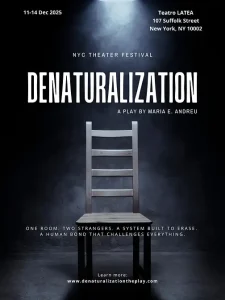
Denaturalization (play) — Maria E. Andreu
This play examines immigration law, belonging, and the emotional consequences of bureaucracy. It reflects my belief that immigrant stories belong on every stage and in every form.
Behold the Dreamers — Imbolo Mbue
Set during the great recession, this novel follows a Nigerian immigrant family navigating wealth, work, and precarity. It’s one of the most widely read modern books about immigration and a staple
Exit West — Mohsin Hamid
A lyrical immigrant novel that treats migration as a global odyssey. Using magical realism, the book explores what happens to love and identity when people flee one place for another.
The Namesake — Jhumpa Lahiri
A classic exploration of family, naming, and generational divide among Asian immigrants. Lahiri’s restrained style captures alienation and belonging through everyday moments.
Highly Renowned Young Adult Books about Immigration
Inside Out & Back Again — Thanhhà Lại
A verse novel about a Vietnamese refugee adjusting to life in the U.S. It’s spare, devastating, and deeply humane, an award-winning, foundational immigrant text.
American Born Chinese — Gene Luen Yang
A graphic novel that explores identity, assimilation, and stereotype through myth and realism. Essential reading for understanding Asian American immigrant identity.
The Poet X — Elizabeth Acevedo
A Dominican American girl finds her voice through poetry while navigating culture, faith, and family. While not about immigration status directly, it’s a powerful dreamer-adjacent story of belonging and self-definition.
Why These Books Matter to Me
What connects all of these works, including my own, is a refusal to flatten immigrant lives into symbols. These novels show immigrants as contradictory, ambitious, flawed, and deeply human. They remind us that every immigrant story is also a story about love, fear, memory, and hope.
As someone shaped by immigrant history, these are the books I return to, not just as research, but as company and as reminders of the deep humanity that unites us, no matter what our background.